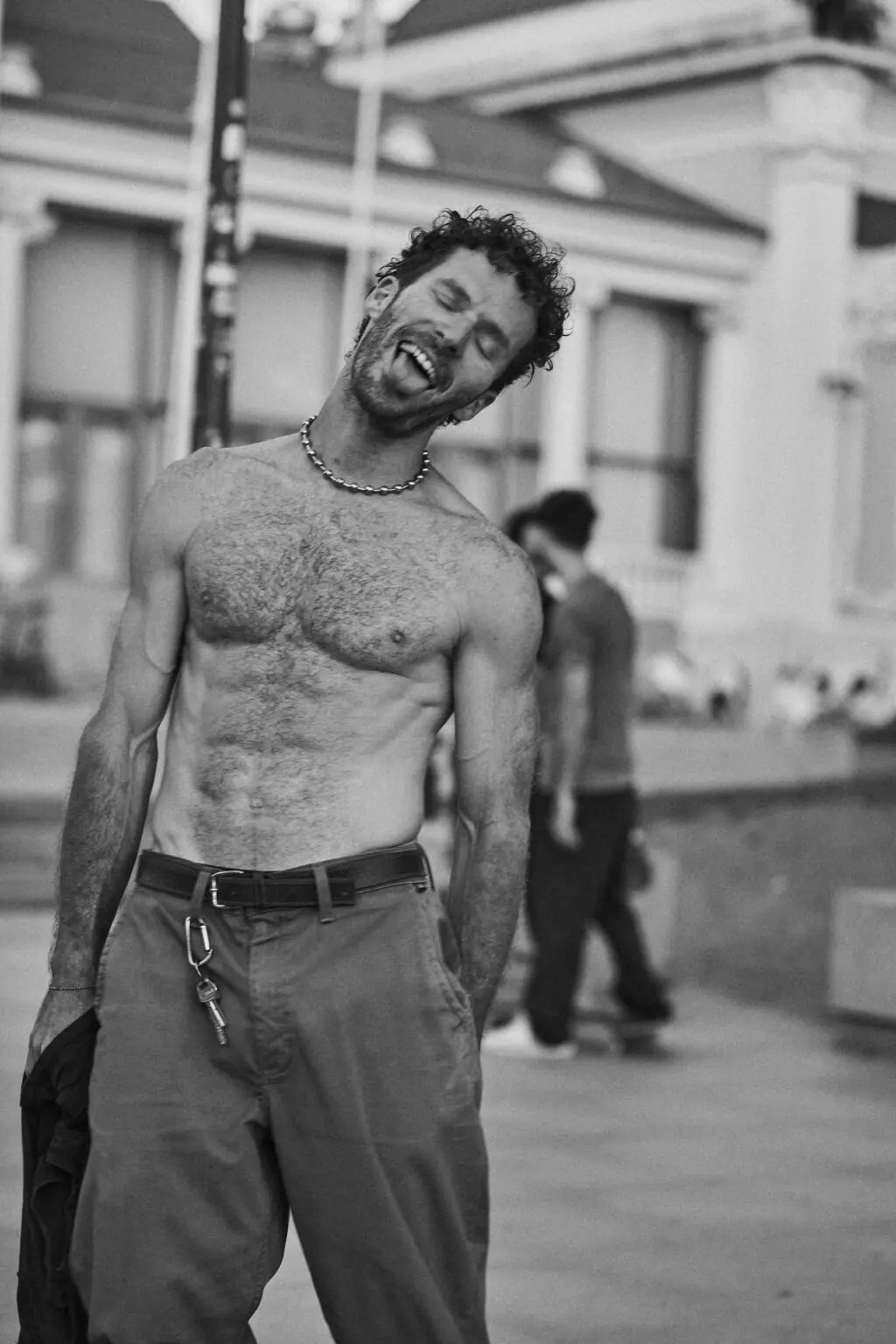

Mika Germond on mastering the craft of skating atypical and dangerous spots

From our print issue n°3 (January 2025) / Introduction by Fernando Paz
When I moved to Lisbon two years ago, I had the chance to hang out with some really amazing skaters. One of them was Mika, and he totally stood out with his unique style. He’s got a cool and creative way of skating that’s just different from so many others. His vibe is super fun and contagious, turning any chill session into a full-on demo. It’s inspiring to see him give it everything.
After the sessions, we’d usually end up chilling somewhere with the crew. Those are the moments that make skating and shooting photos in Lisbon really special for me. We’re going to miss him, but it’s a great excuse to head to Paris more often. Bora, Patrão!
How are you doing, Muscle Mike?
Where did you get that from? –laughs–
I think I read it in a Vague interview. Where does that nickname come from?
That was during my Master’s in Sports Science. It was kind of a heavy but good-natured running joke. Otherwise, in Portugal it’s just Mika, sometimes Mikus, and PJ from Rave calls me Mike La Gnôle, because of some shady story that happened in Biarritz. We’ll let the curious ones figure out why.
I also read that sports were at the heart of your upbringing.
Both my parents were high-level athletes when they were younger. They had to stop once they entered the working world. One of my grandfathers was a physiotherapist and an athlete, my uncle is a PE teacher. So there’s a strong background there, and my parents always raised me with sports morals and discipline.
You also practiced karate and even won competitions…
Karate was a way of learning life with philosophy, because it’s not just fighting, above all it’s a martial art that teaches you discipline. And I was always a bit of a restless kid, so it was also a way to channel my energy.
If someone attacked you in the street, could you get out of it with a Steven Seagal–style move?
I’m not really a violent guy and I honestly prefer to solve things peacefully, but whenever there was a need to use it, let’s just say it definitely helped me.
Does the discipline and rigor you learned through karate concretely help you in skating?
I don’t know if my discipline really comes from martial arts or more from my personality and upbringing, but it’s important to have it in skating, because skating involves a lot of try hard. And if you’re not at least a bit demanding with yourself, you can’t progress. As a kid, when it rained, I would sometimes have solo sessions in my basement, just obsessively trying double flips. I’d spend hours jumping in place, trying, until I finally landed it.
Skateboarding has evolved a lot regarding strength training, going to the gym, or working with a physiotherapist. What’s your take on that?
I think skateboarding used to be considered kind of a rebellious activity, and the idea of maintaining your body wasn’t taken very seriously. But at some point, you do want to keep skating for as long as possible. With shifting mindsets and scientific progress, we’ve discovered plenty of methods for maintenance and recovery. Taking care of yourself, in the end, helps reduce pain and lets you skate longer.
On top of that, information circulates much more easily now with social media. Some skaters basically become their own physiotherapists thanks to people on Instagram posting little exercises to help with ankle pain. Skaters are directly exposed to it, and it resonates with them. Whereas before, you had to book a doctor’s appointment, get a prescription, and then go see a physio.

Do skaters ever ask you for advice?
Yeah, all the time. I always try to help them. But it’s complicated, you can’t treat an injury with just a single piece of advice. I usually ask them a few questions to get a better sense of the problem, then I either give them some tips or direct them to a physio or a doctor. Most of the time, it goes beyond my skill set.
By following your own advice, do you think you’ll be able to skate for a long time?
I hope so, man! But I think it mainly comes down to genetics. My dad always had back and knee problems. He tore his ACL three times and wasn’t treated properly. I tell myself that’s definitely not the example to follow. I want to preserve my abilities for as long as I can.
What do you actually do to take care of your body?
I do a lot of mobility work, basically working on joint range of motion to maintain my flexibility, because as you get older your tendons lose elasticity and your muscles get weaker. Your joints and cartilage also become more fragile. Recovery is super important too, hydration, stretching, and massages.
If during a session you’ve skated some stairs and you feel pain in your heel, then a bit of ice can help reduce inflammation. I’d like to do more strength training, but it’s hard to stay consistent. In my best periods, I’d do it two or three times a week, but right now I’m in the middle of moving to the Paris area.
You mentioned this to me during a Vans event in Paris. It must have been at the launch of the AVE 2. Now that you’re back in Paris, you’re preparing a career change into carpentry…
I don’t really feel like we can call it a career change. I studied because I never believed I could make a living from skating. It slowly became that, alongside my studies and my job as a physical trainer. I started getting more and more opportunities, and I wanted to give skateboarding more space in my life, so I moved to Portugal.
How did the shift happen from being a physical trainer to becoming a “full-time skater”?
That really picked up when I moved to Lyon. I grew up in the Paris suburbs and there wasn’t much going on around there. On top of that, all the skate shops were closing one after another. In Lyon, I was exposed to a dynamic scene. I was hanging out at HDV and at Wall Street. Actually, they were the first to start supporting me. Then I met Loïc Benoit. I first started shooting with him just because I enjoyed it, but it turned out he was also TM at Vans at the time, and he offered me a spot on the flow team. After that came Antiz, Levi’s, Rave, and V7.
I was 21 or 22 years old. Normally, you get on flow around 17, but that makes sense when you started skating at 11 or 12.
How did you start skating?
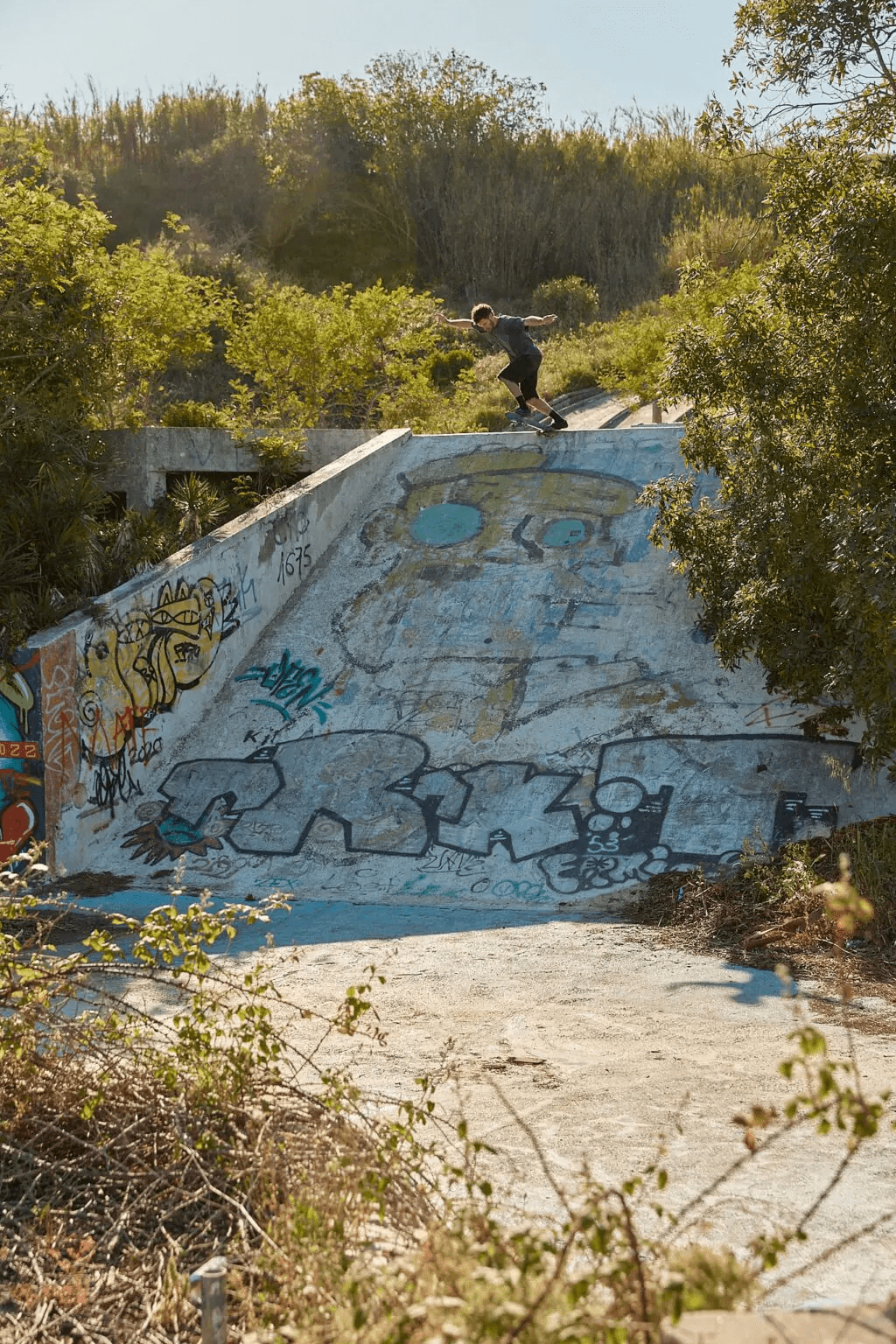
I found a fishtail in the garage that my dad had picked up while working at Go Sport. At first, with my neighbor, we used it like a soapbox cart going downhill in my street. After a while, we thought: “Hey, maybe we can stand up on it and try going down or up a curb!” Later, I bought a board with a nose and learned the basics on my terrace and in the street. There wasn’t any skatepark around me.
Is that how you developed your all-terrain skateboarding style?
I skated for a really long time on a plaza with interlocking paving stones. I’d just look at my board and adapt to the spot. I didn’t know whether I was supposed to skate with my feet or put my hands down. Nollie didn’t even cross my mind, because the ground was so gnarly. For flatground, I had paving stones; for curbs, I had wooden benches all in a city built on hills. Pretty quickly I developed an all-terrain skate style based on downhill and drop-ins.
After Lyon, why did you move to Lisbon?
I had fewer and fewer clients in sports coaching after Covid. On top of that, I felt a kind of duality between giving coaching classes in joggers, talking about lifestyle during the day, and then hitting HDV at night, drinking beers. I like doing things I enjoy 100%, so I focused on skating. Plus, it was starting to really take off. And my girlfriend at the time, who was from Bordeaux, wanted to be closer to the ocean. I was looking for a big city with a strong skate scene, so Lisbon naturally came up. We packed my car and hit the road. I ended up staying almost three years. It was amazing.
Why didn’t you stay longer? Got tired of Pastéis de Nata?
I could never get tired of Pastéis de Nata –laughs–. If I had only listened to my heart, I would have stayed there. But at the beginning of the year, my girlfriend and I broke up, and I thought maybe it was the right time to do something for myself. I also realized that skating full-time for three years didn’t make me as happy as I imagined it would.
I wanted to work with wood, and in a way I wanted to prepare for the future. And after almost thirteen years away from my family since I left for Lyon, I wanted to be closer to them.
Back to Lisbon, I always felt like your style really matched the city with its rough spots and the famous traditional pavement called “calçada”…
I loved Lyon, I spent nine years there, but in terms of spots, I had done it all. I was also a bit tired of staying at HDV all afternoon. That’s just not my mentality, to stay stuck on a plaza.
I experienced Lisbon as a rebirth. When I arrived and saw all the cobblestones, it didn’t scare me at all. On the contrary, I was stoked. That’s how I grew up, and I knew I’d be able to open up new spots. I love exploring, heading out to the suburbs, cruising around by car or by bike.
How would you define a “Mika Germond spot”?
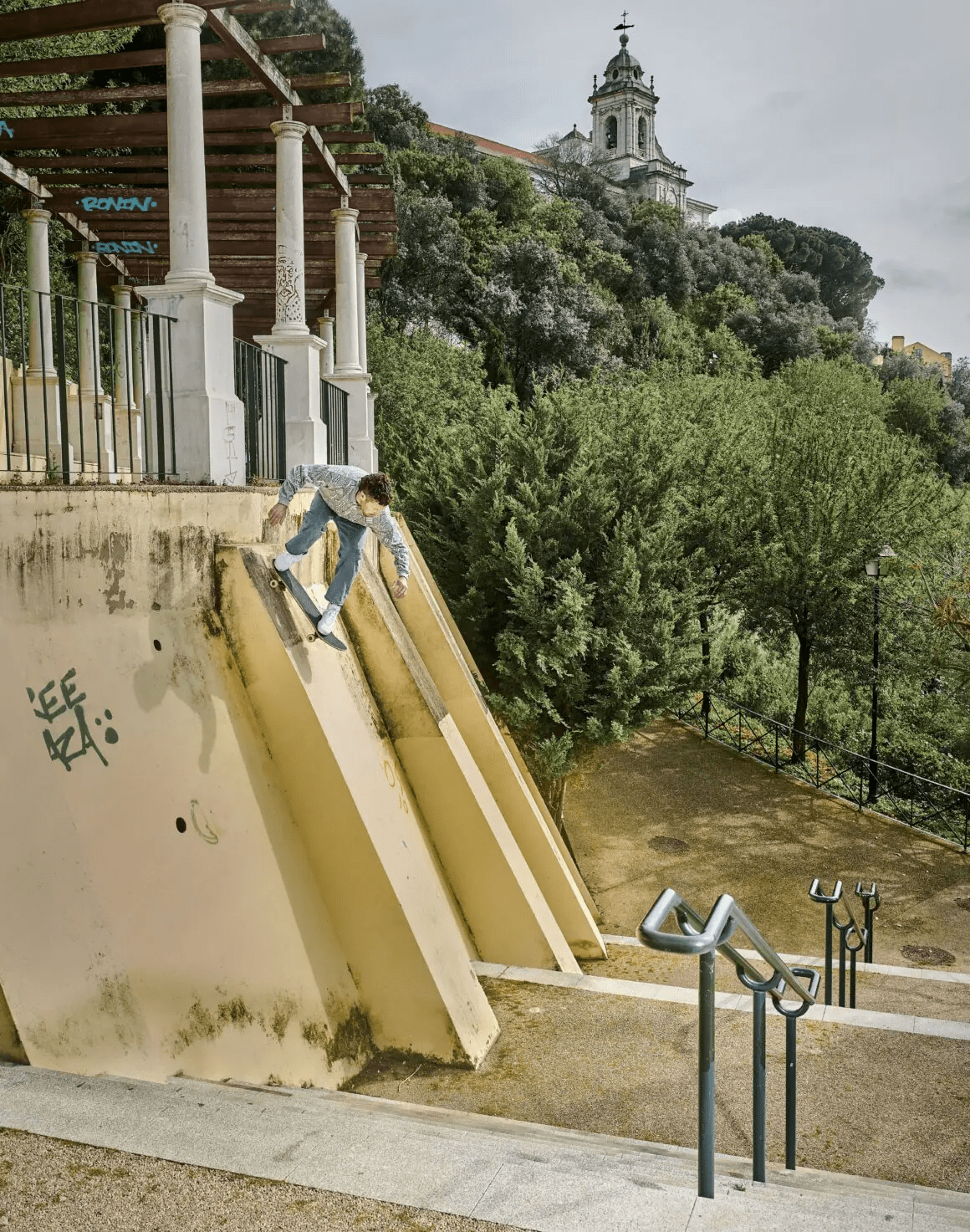
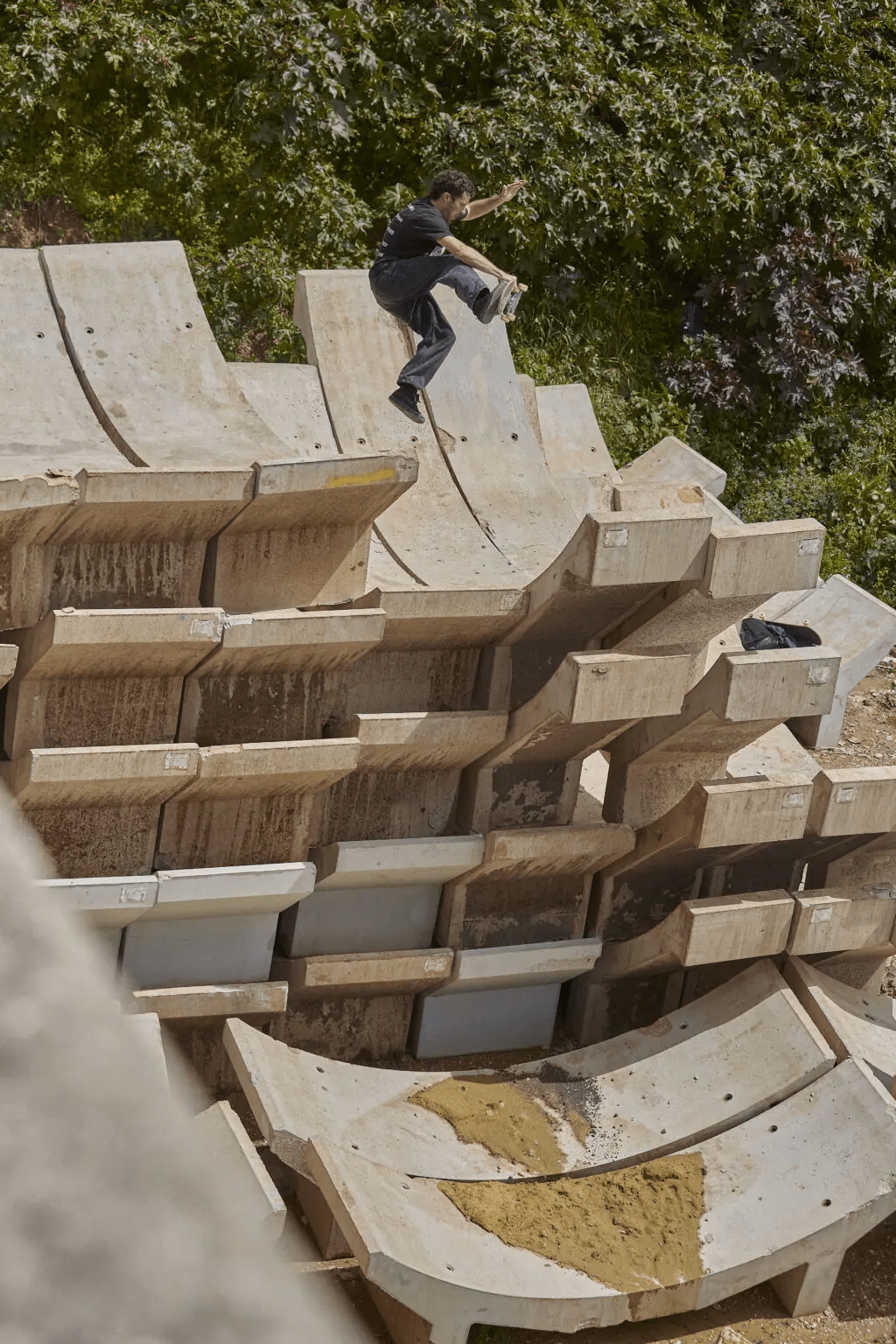
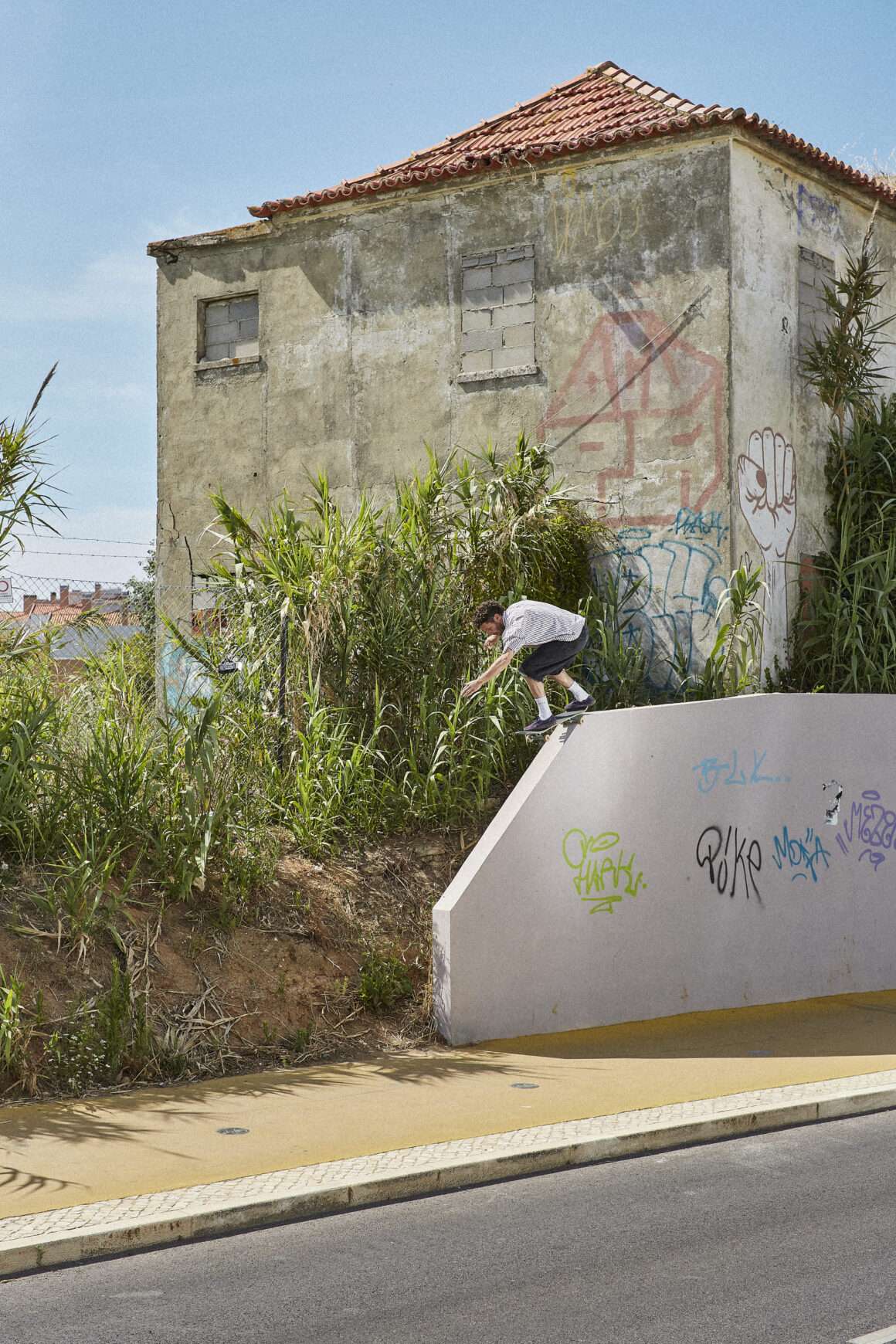
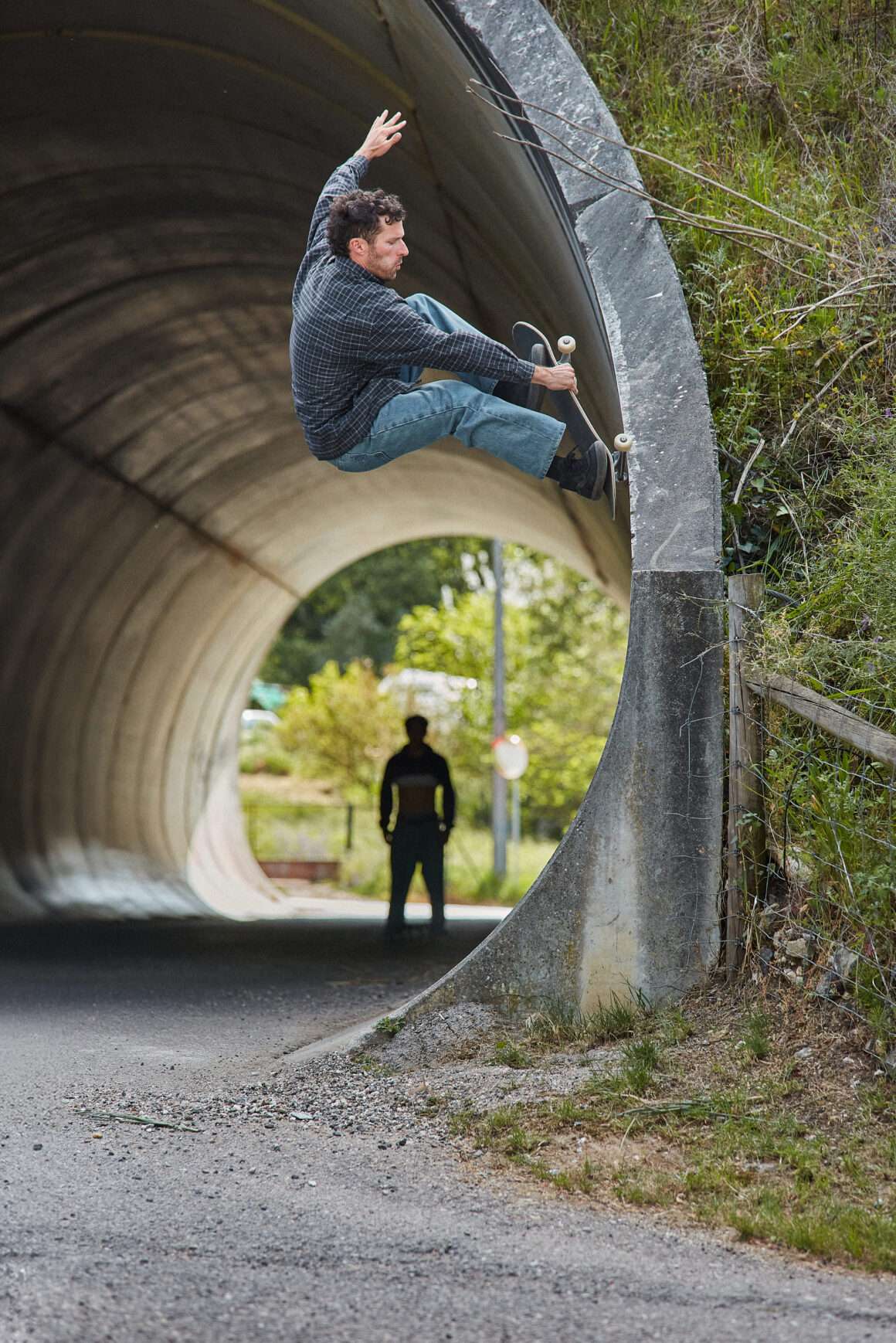
First off, I like it when there are rails or metal. I need a drop-in to pick up speed and a pretty rough landing, because I like it when it’s scary. I also like spots where you need to think a bit to “open” them, because I’m not good at doing NBDs on already established spots. Like, if someone already did a back smith, I’m not going to go there and do a flip back smith.
How do you deal with fear?
You have to analyze the spot. Then it’s a battle with my fear. At any level of skating, you’ve always been frozen by fear at some point. But with experience, and with what I’ve learned in mental training, I’ve figured out how to reassure myself. I try to identify the variables that are causing the fear and ask myself if the danger is real or if it’s just a mental block.
If it’s just mental, I tell myself it’s a trick I’ve done a thousand times in a park or at a street spot, and I know how to do it. So I convince myself I can land it. If it’s a real danger like a rough ground where I could tear up my hands, I think: “Okay, if I don’t want to put my hands on the ground, what do I need to do?” That means I have to land the trick on my feet no matter what, and then roll out of it. I actually enjoy that kind of mental battle.
Have there been mental battles you’ve lost?
Not often, but one comes to mind, a dream spot I found in Lisbon. It was a slanted wall, and I wanted to do a drop-in on it. But the wall was at about a 45° angle, and super narrow. There was also a rail over 16 stairs that curved down. I climbed to the top, with the photographers and the homies there, but I just couldn’t do it. The spot had everything I usually love, but that day, I didn’t feel capable of it.
That’s understandable. How did you manage to stay productive during your time in Lisbon? You filmed quite a few parts for your sponsors, including your pro part on Thrasher…
It was the first time I finally had all my free time to skate. I’m kind of hyperactive, and I also feel guilty when I’m not doing anything. So I really wanted to discover as many spots as possible and stack clips. Right when I arrived, I found an incredible scene with lots of super motivated filmers and photographers. Among them, Camille, a.k.a. Frugaskate on Instagram, was one of the first people I filmed with. He’s such a sweetheart. A little later, I met Fernando, who had just moved from New York. He was really hyped on shooting photos, so we tried to link up whenever our schedules aligned. He actually comes more from the fashion world, but you’ve got to give people a chance when the vibe is good! Shoutout to Ojo de Paz.
What did you take away from your experience in Lisbon?
Lisbon has a very cosmopolitan culture, with people from many different nationalities, mostly Latin. I hung out a lot with Brazilians. They shared the little they had. I learned a lot about generosity and humility during those three years.
Did you pick up any Portuguese curse words?
“Frances do carai,” which roughly means “French assholes,” and “Porra,” which is like saying “fuck,” but it’s way more commonly used by Brazilians. But generally, people there aren’t very vulgar.
Do you have any upcoming projects?
I just started moving to the Paris area two weeks ago. I’m going to focus on carpentry. I want to learn more technique and really get into the trade as a craftsman. I’ll try to work with some friends who are already established, like Nico Gisonno and Oscar Candon.
On the skate side, I want to film again in Paris with the homies. But it won’t be my main focus. First, I want to skate for myself.
Lately, I’ve been into skating transition. I built myself two fishtail boards, but there aren’t many transitions in Paris. So I’m going to have to hunt for spots around here.